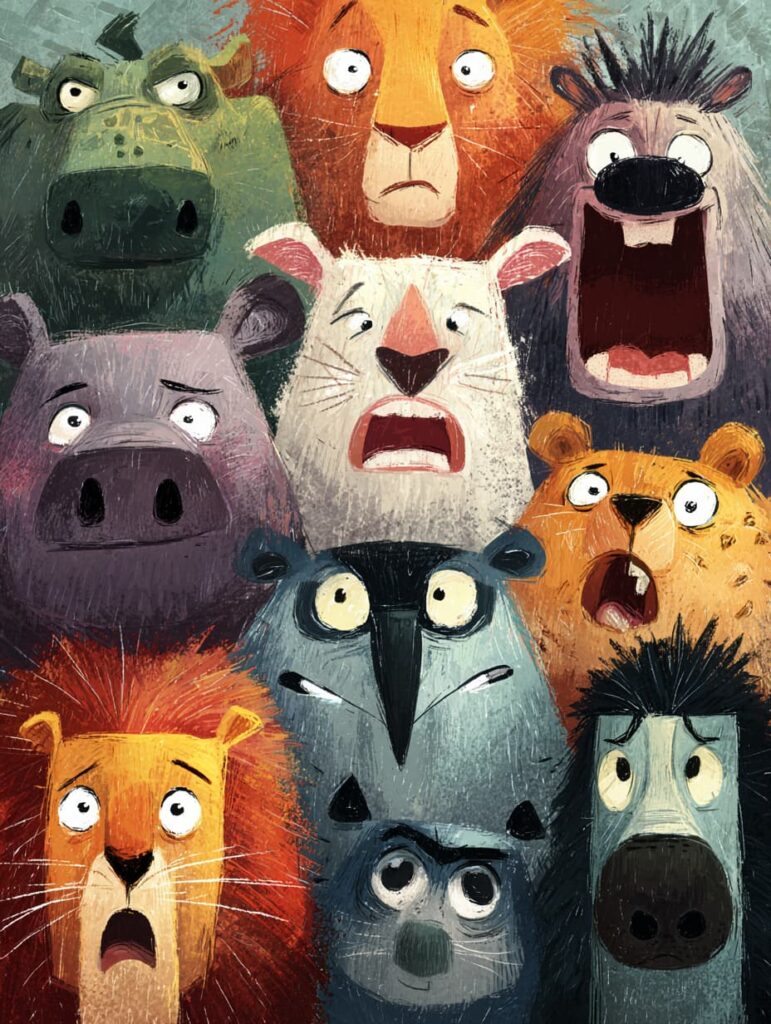
Understanding whether animals feel emotions like humans has fascinated scientists, animal lovers, and philosophers for centuries. Whether watching a dog greet its owner after a long day or observing elephants appear to mourn their dead, people often attribute complex feelings to animals. But are these emotional experiences comparable to human emotions? And what does science actually say about animal emotions? In this article, we explore the scientific evidence, common misconceptions, and why this topic matters both ethically and practically.
What Do We Mean by “Emotion”?
Before diving into scientific findings, it is important to define what we mean by “emotion.” In humans, emotions are typically described as subjective experiences accompanied by physiological responses and behavioral expressions. Fear, joy, anger, disgust, sadness, and love are commonly recognized emotional states. Human emotions are closely tied to memory, cognition, and social interaction.
When we talk about emotions in animals, we are asking whether animals experience internal states that resemble human emotions—not whether they feel exactly the same as humans, but whether they have emotional processes that influence behavior and physiology. This distinction is crucial to avoiding oversimplification.
Early Skepticism: Behaviorism and Emotion Denial
In the early 20th century, behaviorism dominated psychology. Behaviorists like John B. Watson argued that internal mental states were unscientific because they could not be directly observed or measured. As a result, behaviorists focused on observable actions and avoided discussions of emotions in both humans and animals.
Because of this historical perspective, early scientific research often assumed that animals did not experience emotions like humans. Instead, behaviors were interpreted as conditioned responses without emotional depth. This view has since shifted dramatically with advances in neuroscience and comparative psychology.
The Neurological Basis for Emotions
One of the strongest lines of scientific evidence for animal emotions comes from studies of neuroanatomy. Many animals, especially mammals and birds, possess brain structures that are homologous to those involved in human emotional processing.
For example:
- The amygdala plays a key role in fear and threat detection.
- The hypothalamus regulates physiological responses associated with emotions.
- The limbic system (a network of brain regions) is crucial for emotional processing.
Studies have shown that these brain areas are active in animals during situations that likely involve emotional responses. For instance, when a dog shows stress in response to a threatening stimulus, the amygdala lights up in brain imaging in ways that parallel human fear responses.
Furthermore, neurochemicals associated with emotions in humans—such as dopamine, serotonin, and oxytocin—are also present in many animals. Oxytocin, often dubbed the “bonding hormone,” increases in both humans and dogs during positive social interactions, suggesting a shared biological substrate for social bonding.
Behavioral Evidence of Emotional Responses
While brain structures provide the machinery for emotions, behavior reflects how emotions manifest. Many animals exhibit behaviors that are best explained by emotional states:
- Social bonding and attachment: Dogs form strong attachments to their human caregivers; elephants display complex social bonds that persist over decades.
- Play behavior: Play is observed in mammals (dogs, cats, primates), birds (parrots, crows), and even some reptiles. Play behavior often involves joy-like vocalizations and social interaction.
- Grief and distress: Animals such as elephants, dolphins, and certain bird species show behaviors after the death of a companion that resemble mourning. They may linger near the body or show changes in social behavior.
While it is impossible to know exactly what an animal “feels,” these patterns suggest emotional experiences that go beyond simple reflexive reactions.
The Role of Cognitive Processes
Emotions in humans are intertwined with cognition—our thoughts, memories, expectations, and self-awareness. Some scientists argue that for an emotional experience to be truly “like” a human’s, it would require similar cognitive complexity. This leads to a spectrum model of animal emotions rather than a binary yes/no answer.
For example:
- Basic emotions: Fear, joy, and anger may be widespread across many species because they are essential for survival.
- Complex emotions: Emotions like guilt, embarrassment, or pride may require self-reflective thought and are more controversial in animals.
Research in animals such as great apes, dolphins, and elephants indicates advanced cognitive capacities that could support more complex emotional states. However, scientists caution against anthropomorphizing—projecting human mental states onto animals without evidence.
Misconceptions About Animal Emotions
Despite growing evidence, misconceptions remain widespread. Here are a few common ones:
1. All animal emotions are the same as human emotions.
While animals show emotional responses, the subjective quality of those emotions may differ. A dog’s sadness when left alone may not be identical to human grief, even if it is behaviorally similar.
2. Animals only act emotionally when they want something.
Some people assume that displays like a cat rubbing against a person are manipulative. However, many behaviors are instinctual and tied to social bonding rather than instrumental goals.
3. Reptiles and fish have no emotions.
Older views held that “lower” animals lacked emotions. However, growing evidence suggests that many species experience basic affective states. The degree and complexity vary, but emotion-like processes are not exclusive to mammals and birds.
Why Understanding Animal Emotions Matters
Recognizing that animals have emotional lives has several significant implications:
1. Animal Welfare and Ethics
If animals can experience emotions like fear or distress, this strengthens ethical arguments for humane treatment in farms, laboratories, zoos, and homes. Welfare standards increasingly incorporate emotional well-being, not just physical health.
2. Better Animal Care
Understanding how animals feel helps caregivers and trainers create environments that reduce stress and support positive emotional states. For example, enrichment activities for zoo animals are designed to promote enjoyment and engagement.
3. Conservation Strategies
Conservation efforts benefit from knowing the social and emotional needs of species. Social animals may require protection of group structures, not just habitat.
4. Human–Animal Relationships
Recognizing emotional capacities fosters deeper bonds between humans and companion animals, improving interactions and mutual well-being.
Future Directions in Research
Scientists continue to explore animal emotions through interdisciplinary methods:
- Neuroscience and brain imaging to map emotional processing.
- Behavioral studies across species to identify universal and unique emotional patterns.
- Comparative psychology to understand how emotions evolved.
- Ethology (the study of animal behavior in natural conditions) to contextualize emotional responses in ecological settings.
Future research aims to refine our understanding of subjective experience, combining objective data with cautious interpretation.
Conclusion
So, do animals feel emotions like humans? The scientific evidence strongly supports the idea that many animals experience emotion-like states that are meaningful and influential in their lives. While these emotions may not mirror human experiences exactly, they are rooted in biological, cognitive, and social mechanisms that humans share with other species.
It is neither scientifically rigorous nor fair to dismiss animal emotions altogether. Instead, we should recognize emotion as a spectrum—ranging from basic affective states shared widely across the animal kingdom to more complex experiences that may be concentrated in species with advanced cognition.
By understanding animal emotions with nuance and respect, we improve not only our scientific knowledge but also our ethical approach to the natural world and the creatures we share it with.