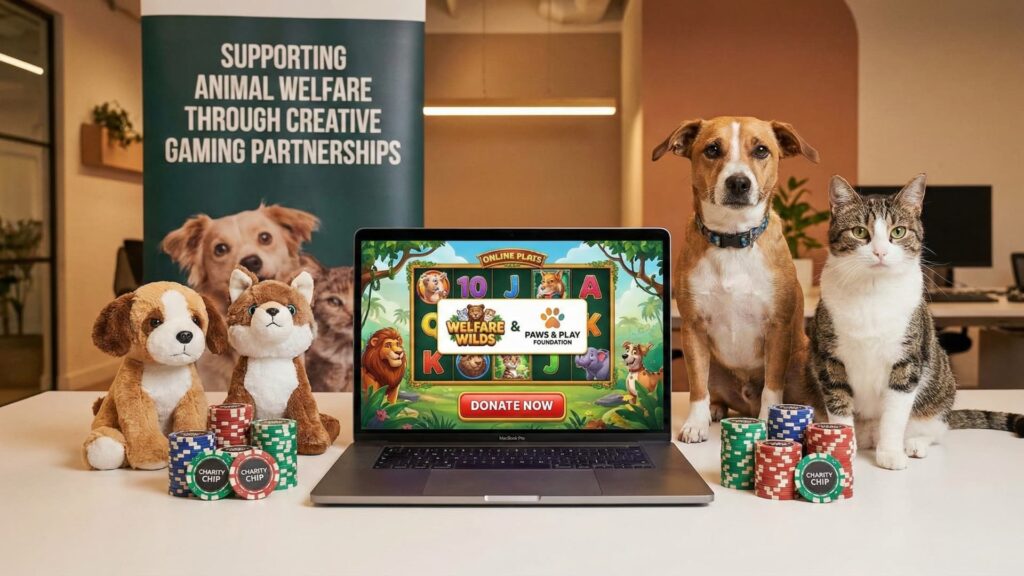
Gaming companies are teaming up with animal charities. This isn’t just good PR. It’s actually working. Players donate millions while having fun. Charities get funding they desperately need. And gaming companies build stronger connections with their communities. Everyone wins, including the animals.
The concept is straightforward. Gaming platforms integrate charitable giving into their ecosystems. Players can donate while they play. Sometimes they don’t even realize they’re donating. A percentage of their bets goes to animal shelters. Their in-game purchases fund wildlife conservation. Their tournament entries support rescue organizations. The money flows naturally as part of the gaming experience. Traditional charity fundraising has problems. People ignore email campaigns. They skip donation requests. Charity fatigue is real. But gaming changes the equation. Players are already engaged. They’re already spending money. They’re having fun. Adding a charitable component doesn’t interrupt their experience. It enhances it.
How These Partnerships Actually Function
Different gaming platforms use different models. Some are simple. Others get creative. But they all share a common goal. Make donating effortless for players. Make funding reliable for charities. Make the whole process transparent so everyone trusts it.
The most basic model is percentage donation. A casino pledges 1% of all profits to animal welfare. Players don’t do anything special. They just play normally. The casino automatically sends money to partner charities monthly. It’s passive. Predictable. Easy to manage. Some platforms get more interactive. They create special charity tournaments. Entry fees go directly to animal shelters. Winners get prizes. Charities get funding. Players get competition and purpose combined. These events often attract players who wouldn’t normally donate.
In-game purchases offer another avenue. Buy a special skin or avatar? Half the price goes to wildlife conservation. Purchase bonus chips during charity hours? The casino matches your buy-in with a donation. Players get their gaming content. Animals get help. NFT projects are entering the space too. Gaming platforms create limited-edition NFTs featuring endangered animals. Players buy them. The proceeds fund conservation efforts. The NFTs have utility in games. They’re collectibles. They’re investments. And they’re charitable contributions all at once.
Real Success Stories Show What’s Possible
PokerStars ran a charity series for World Animal Day. They donated tournament fees to animal welfare organizations globally. The series raised over $500,000 in two weeks. Players loved it. The tournaments filled up faster than regular events. Twitch streamers have built massive campaigns around animal charities. They play games live. Viewers donate during streams. The streamers match donations. Some campaigns raise six figures in a single day. The gaming content attracts audiences. The animal welfare angle motivates donations.
Mobile gaming shows huge potential. A match-three game partnered with the World Wildlife Fund. Players could watch ads to trigger donations. Every ad view sent money to endangered species programs. The game generated $2 million for WWF in its first year. Players didn’t spend a penny. Esports organizations are jumping in. Teams adopt shelter animals as mascots. They promote adoption during tournaments. They auction signed gear with proceeds going to rescue groups. One Counter-Strike team raised $100,000 for local shelters during a single championship season.
Why This Works So Well
Gaming audiences care about causes. Studies show gamers donate more to charity than average people. They’re engaged online. They’re used to digital transactions. They respond to community initiatives. Animal welfare resonates especially strongly. Most gamers have pets. They understand animal suffering. They want to help but don’t always know how.
The integration is seamless. Traditional charity requires extra steps. Visit a website. Fill out forms. Enter payment info. It’s friction. Gaming partnerships eliminate that friction. Players are already on the platform. Already making transactions. Adding charity is one click. Sometimes zero clicks. Transparency builds trust. Blockchain gaming platforms can show exactly where money goes. Smart contracts automatically split payments. Players can verify donations on-chain. This builds confidence. Players donate more when they trust the process completely.
Gamification makes giving fun. Leaderboards track charity donations. Badges reward generous players. Special events celebrate top donors. The competitive gaming mindset applies to charitable giving. Players don’t just donate. They compete to donate more. The total donations skyrocket.
The Benefits Extend Beyond Money
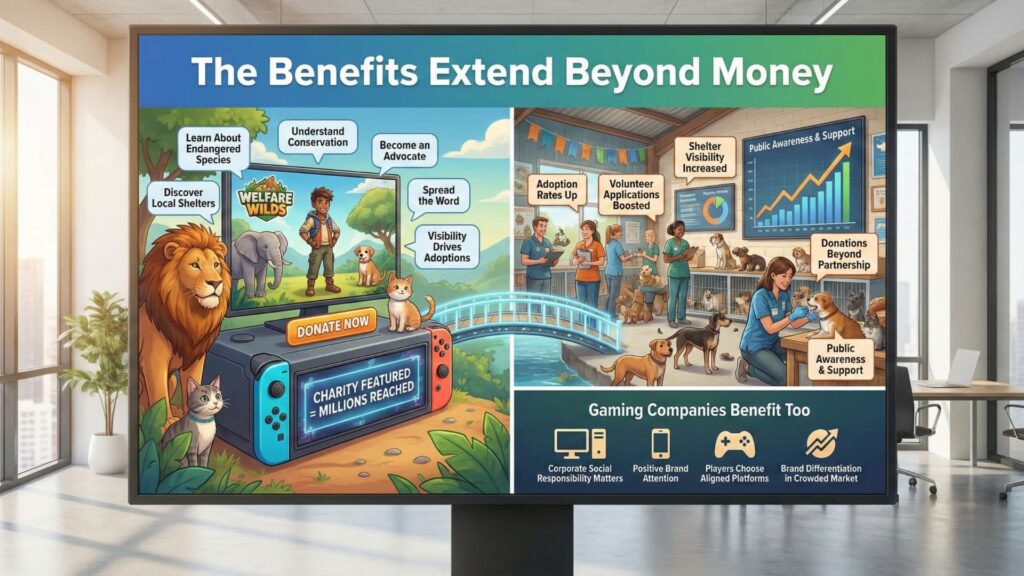
Gaming partnerships raise awareness. Millions of players see animal welfare messages. They learn about endangered species. Discover local shelters. Understand conservation needs. This educational component has lasting impact. Players become advocates. They spread the word. Shelters gain visibility they couldn’t afford otherwise. A charity featured in a popular game reaches more people than a year of traditional marketing. That visibility drives adoptions. Increases volunteer applications. Boosts donations beyond the gaming partnership itself.
Gaming companies benefit too. Corporate social responsibility matters to consumers. Companies supporting animal welfare attract positive attention. Players choose platforms that align with their values. Charity partnerships differentiate brands in crowded markets.
What Smart Partnerships Look Like
The best partnerships are transparent about everything. They publish donation amounts regularly. Show exactly which organizations receive funds. Explain how money gets used. This transparency builds trust. Successful programs involve players in decisions. Polls let communities choose which charities to support. Players vote on specific projects to fund. This engagement increases participation.
Strong partnerships provide updates on impact. Share stories of rescued animals. Show habitat restoration progress. Highlight specific outcomes the gaming donations enabled. These stories connect players emotionally to the cause. Long-term commitments work better than one-time events. Ongoing partnerships create sustained funding. Charities can plan better. The relationship deepens over time.
The Future Looks Promising
More gaming companies will adopt charitable models. The first movers proved it works. Donations don’t hurt profits. They often increase player engagement and retention. Technology will improve the experience. Blockchain makes donations more transparent. VR could let players visit sanctuaries virtually. AI might match players with causes they care about most.
Younger players expect companies to support causes. They choose platforms partly based on values. Gaming companies will need charitable partnerships to compete. The animals win biggest. More funding means more rescues. Better habitats. Stronger conservation programs. Lives saved. Species preserved.
This Is Just The Beginning
Gaming and animal welfare make a natural partnership. Players want to support good causes. Charities need innovative funding sources. Gaming platforms can connect them efficiently. The model works. The results are proven. Smart gaming companies are already building these partnerships. They’re seeing benefits financially and reputationally. Players are responding enthusiastically. Charities are getting crucial funding.
The gaming industry has incredible reach. Millions of players worldwide. Billions in transactions. That scale can transform animal welfare funding. The partnerships will get bigger. The models will get better. The impact will keep growing. Animals can’t advocate for themselves. But gamers can. Through creative partnerships that make giving effortless and fun.